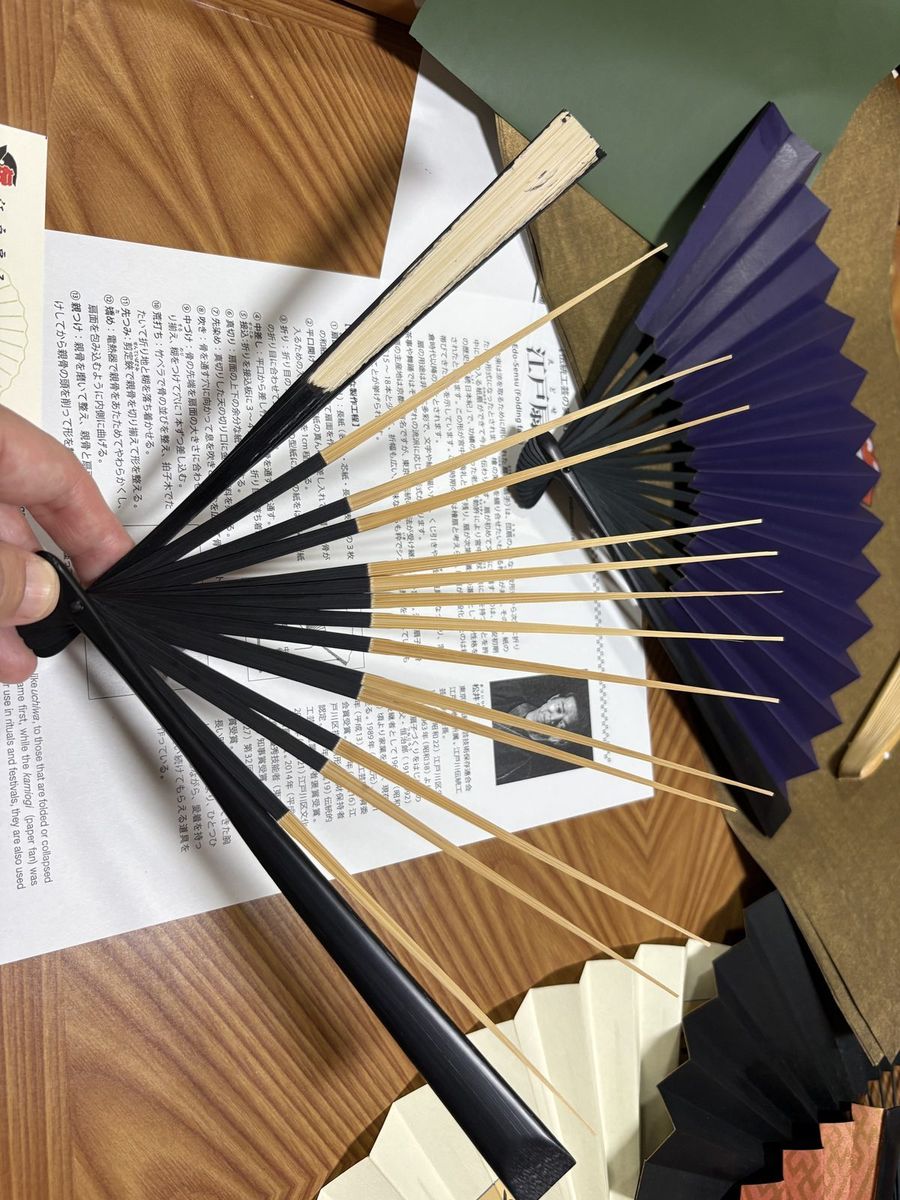
A fan shaped by townspeople
Edo is the old name for Tokyo, and sensu is the Japanese word for a folding fan. The folding fan itself was born in Kyoto in the Heian period (see A History of the Japanese Folding Fan). It is said to have reached Edo during the Genroku era, around the turn of the 18th century.
The Kyoto fan had been refined inside aristocratic culture: delicate and courtly. In Edo it was reshaped for the lives of ordinary townspeople. Decoration was pared away, the ribs grew thicker, the lines cleaner. The Edo sensu is the fan that came out of that taste for understatement.
Edo fans and Kyoto fans: the differences
The clearest difference is the number of ribs, and how thick they are. Side by side:
- Number of ribs
- About 30 in a Kyoto fan. 15 in an Edo fan
- Thickness
- Each rib of an Edo fan is thicker
- Fan face
- Kyoto fans also use silk and are ornate. Edo fans use washi, Japanese paper
- Character
- Kyoto: delicate and refined. Edo: plain and strong
- When closed
- An Edo fan snaps shut with a clear sound
Neither is the better fan. One was polished at court, the other grew up among townspeople, and that difference in origin became a difference in form.
Why it snaps shut
The sound of an Edo fan closing is not decoration. It comes from how the fan is built. The ribs are thick and the folds are wide, so as the fan closes the ribs meet cleanly, one against the next.
Because it closes so crisply, the Edo fan has also long been the fan used on stage by storytellers in yose, the traditional comic-storytelling theatres of Tokyo.
More than thirty steps, by one pair of hands
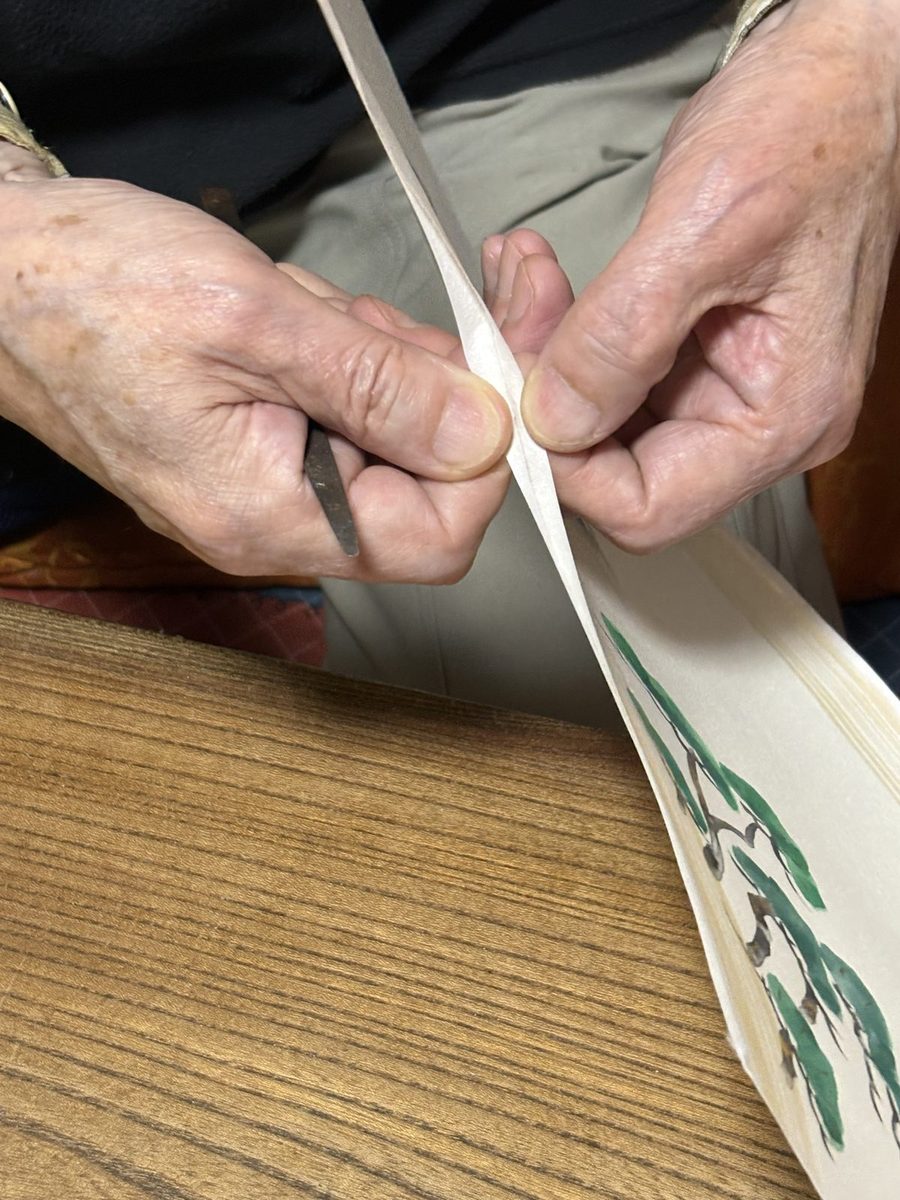
There is one more thing that sets the Edo fan apart. Its thirty-odd steps are all carried out by a single artisan.
Layering sheets of paper to build the fan face. Folding it between creased paper moulds. Pasting each rib and sliding it into place. Because the same hands pass over the fan from beginning to end, the maker’s judgement shows in the finished piece.
Until around the Shōwa 50s (1975–84) there were more than twenty Edo fan artisans in Tokyo. Today only a few remain. In Edogawa City, Hiroshi Matsui of the workshop Matsui is the only one. His eldest son, Tomoya, is training to carry the craft on.
The Edo fan as a gift
A fan in Japan was never only for keeping cool. It was carried to celebrations, used in dance, and given as a present. Because an open fan widens towards its edge, it is called suehirogari — “spreading out towards the future” — and has long been chosen as a sign of good fortune.
It is not put away in a drawer; it is used, and the giver is remembered each time. That is why Edo fans are chosen for company anniversaries and for gifts to guests from overseas. Engraving and packaging are covered on our page for corporate gifts and anniversary pieces.
And then, an Edo fan in leather
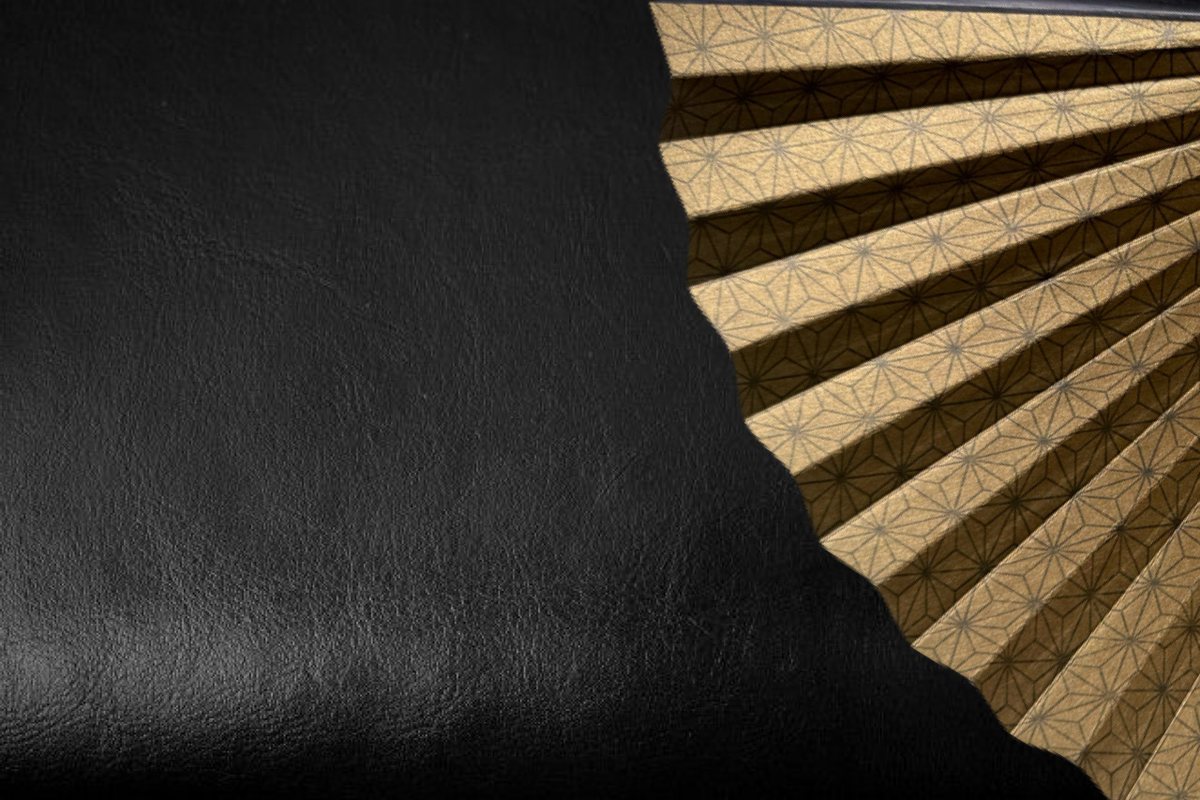
Bamboo ribs and washi. For as long as it has existed, the Edo fan has been made of those two things.
The Edo Leather Fan adds a third. The front face is cowhide shaved to about 0.3 mm; the reverse is washi printed with an auspicious pattern. It is a leather fan, but the thick ribs and wide folds are unchanged — so it closes with the same clear snap.
See that fan, in photographs and film.
About the Edo Leather FanSources (in Japanese): Edogawa City, “Edo fans at the height of the shipping season (29 May 2026)” and “Edo fans: Hiroshi Matsui, profile”. The rib counts, the period of arrival in Edo, the names of the steps and the number of artisans follow these pages.