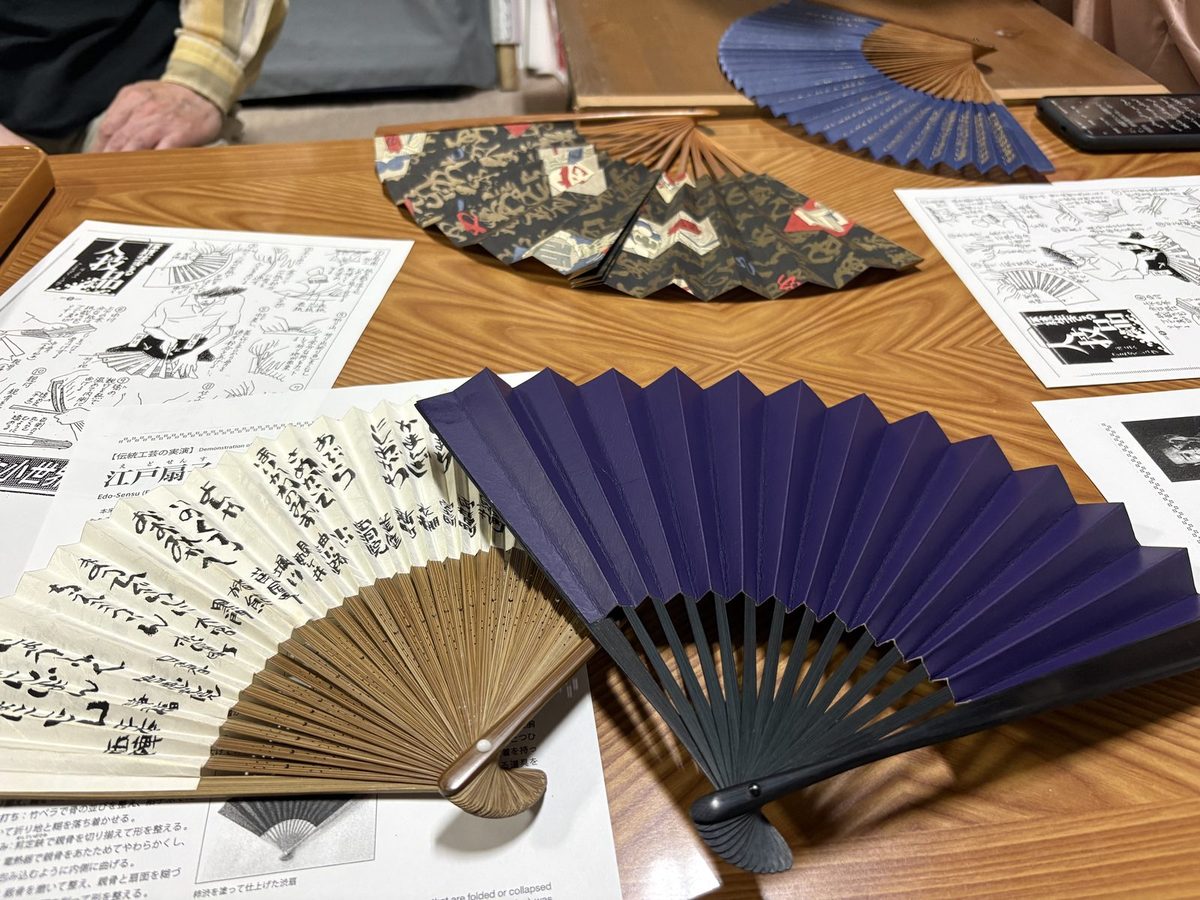
The rigid fan and the folding fan are two different things
It is worth separating two objects that English tends to call by the same word. The rigid fan — a paddle on a handle, called uchiwa in Japanese — and the folding fan, sensu, were born in different places at different times.
The rigid fan is older. It came to Japan from China in antiquity, in a form with a much longer handle, used less for cooling than for concealing the face of a noble or a woman, and for brushing insects away. The smaller version of it gave Japanese the word uchiwa.
The folding fan appeared roughly a century after the rigid fan reached Japan, during the Heian period. It did not come from China. It was invented in Japan.
It began as a notebook
The earliest folding fans were called hiōgi: several thin slips of cypress wood bound together at one end. They were used to write down the intricate etiquette of the imperial court. In other words, the first fan was not a cooling device but a notebook.
They were carried mainly by men, as an aide-mémoire for public occasions. Once colour and painting were added, the fan spread to the women of the court as well; their version, the akome-ōgi, was prized as an ornament.
The oldest surviving hiōgi was discovered inside the arm of a thousand-armed Kannon statue at Tō-ji temple in Kyoto. It carries the year 877. A fan more than eleven centuries old had been kept safe inside a Buddhist figure.
Later came the kawahori-ōgi, a bamboo or wooden frame with paper pasted on one side — a summer fan. By then, the fan had become indispensable to the formal dress of the Heian aristocracy.
The fan in The Tale of Genji
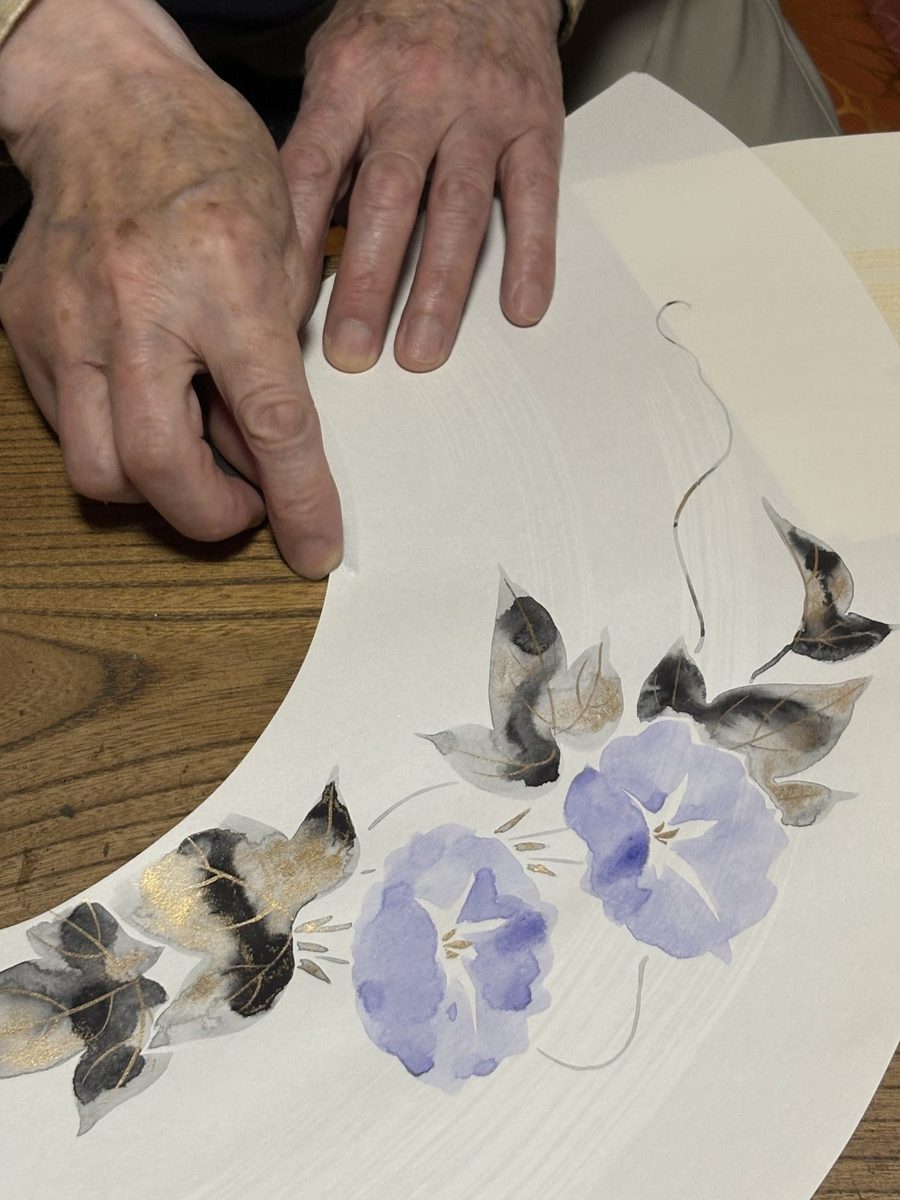
In the Heian period the fan was never only a way to move air. It was an instrument of etiquette, and a way of reaching another person.
Fans appear repeatedly in The Tale of Genji. Characters fan themselves; women hide their faces. But they also write a poem, place it on a fan and send it, or use the fan to summon someone. A small object that fits in the palm was serving as a medium for feeling.
The Japanese fan became the European fan
In the 13th century, Japanese folding fans travelled through China to Europe, where they developed on their own terms into fans of feathers and lace.
One detail is worth noticing. In the West, the fan was a woman’s object from the very beginning. What started in Japan as a memorandum carried by men at court became, once it crossed the sea, an accessory of the European lady. The fan held in a European portrait traces its design back to Japan.
Meanwhile in China, the fan was changed to have paper pasted on both faces. That version was re-imported to Japan in the Muromachi period and spread widely. This is an object that left, changed, and came home again.
It reached ordinary people only in the late Edo period
Until the 13th century, only aristocrats, priests and a few others were permitted to use fans. Later they became available to ordinary people and entered Noh, theatre and the tea ceremony.
But the use that seems most obvious today — simply keeping cool — only became widespread in the late Edo period, when the culture of ordinary townspeople flourished. Out of twelve hundred years, the fan has been an everyday cooling tool for a surprisingly short stretch of them.
Edo fans and Kyoto fans
Fans in Japan have regional traditions. Because the folding fan was born in Kyoto, the Kyō-sensu is the best known, and it is designated a traditional craft at national level. There are also Edo fans and Nagoya fans, each with its own character.
Even the ribs have their own region: the Takashima senkotsu made in Takashima, Shiga prefecture, accounts for close to ninety percent of all fan ribs produced in Japan.
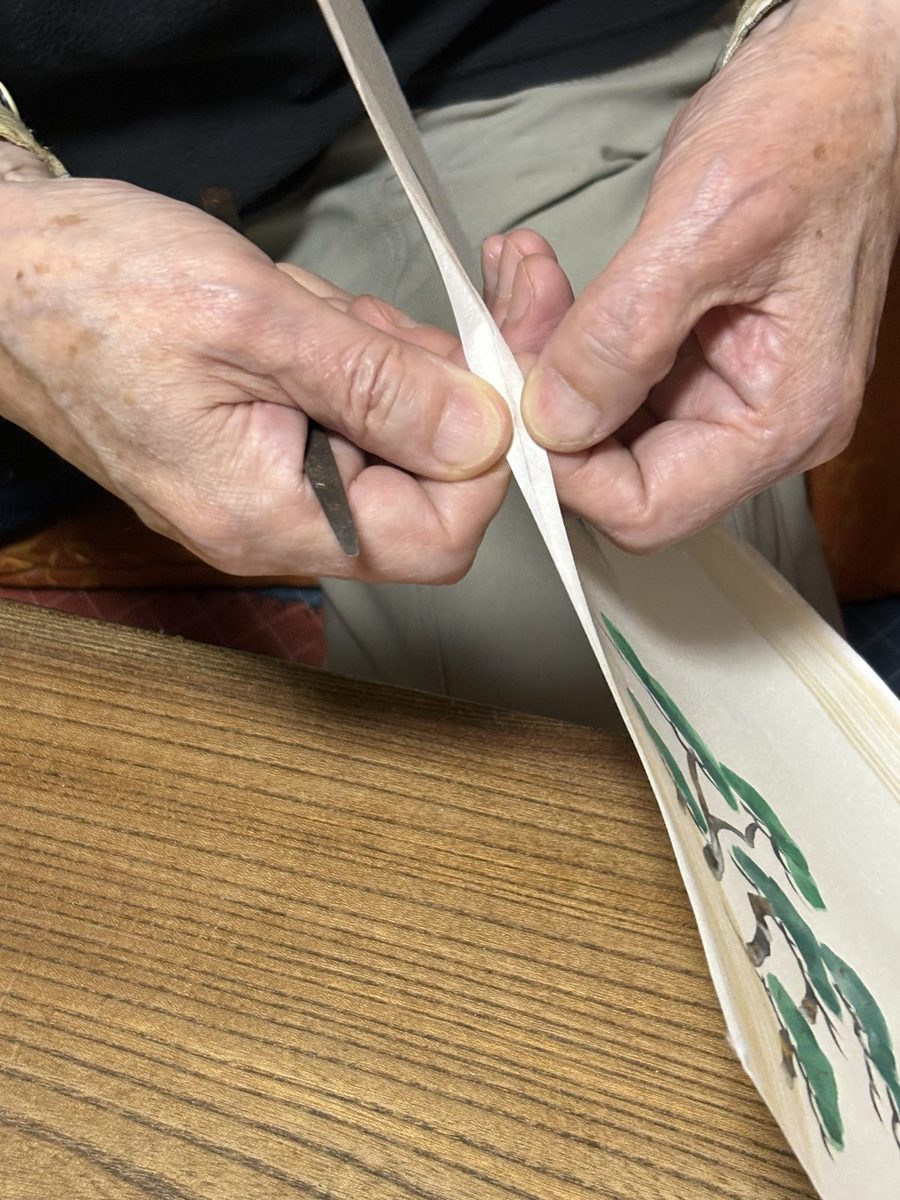
What distinguishes the Edo fan is that it has fewer ribs, and each one is thicker. Where the Kyoto fan is delicate and refined, the Edo fan is plain and strong. The wider folds are also why it snaps shut with a clear, carrying sound — a sound that exists because of how it is built.
How fans are measured
Fan sizes are given in sun, a traditional Japanese unit. A rough guide:
- 1 sun
- about 3 cm
- 7 sun
- about 21 cm (length when closed)
- 7.5 sun
- about 23 cm — the size of the Edo Leather Fan, suitable for any hand
- Ribs
- counted in ken: the outer ribs and inner ribs added together
A larger fan moves more air but takes more room to carry. Around seven sun is the practical range for a fan you keep with you.
And then, a fan of leather
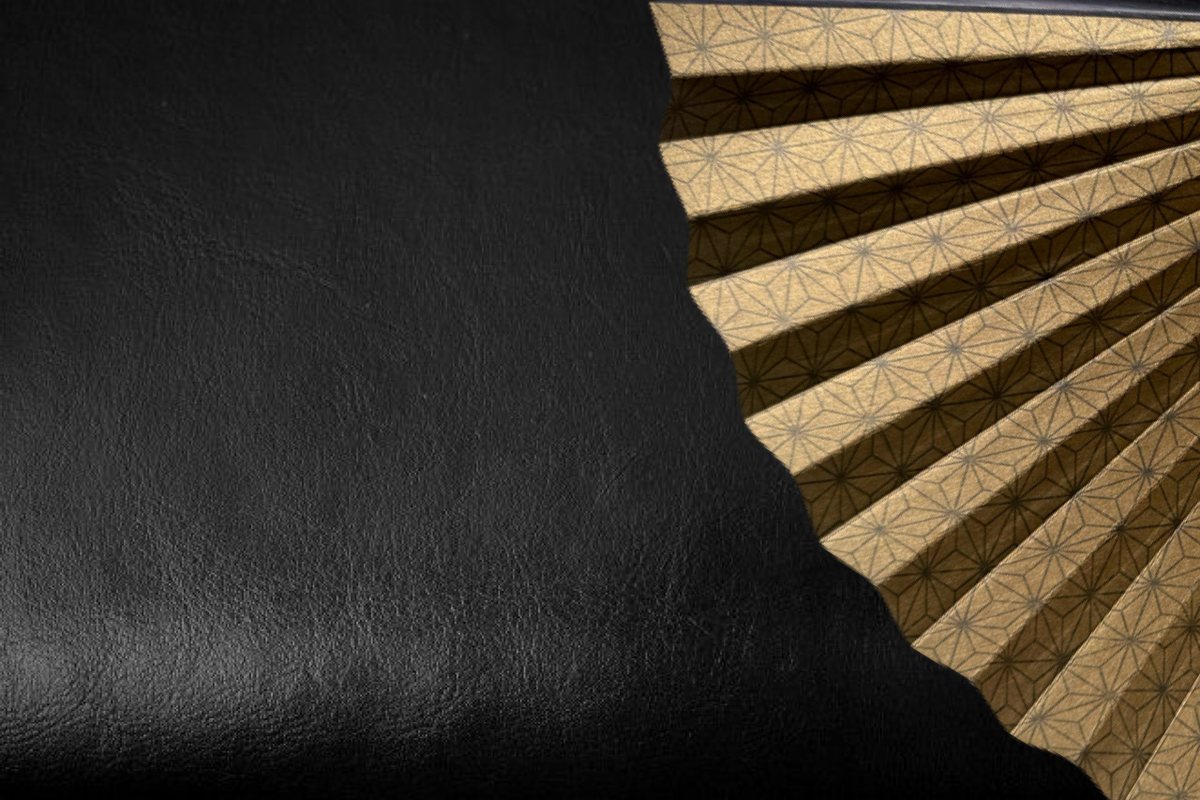
For twelve hundred years, the face of a fan was paper.
When the leather artisans of Tokyo’s old riverside districts learned that in Edogawa only one person was left carrying the Edo fan craft, they took the work on. After roughly a year of trial and error, a fan appeared faced with leather about 0.3 mm thick.
See that fan, in photographs and film.
About the Edo Leather Fan